 BrutalGamer Bringing you Brutally Honest feedback from today's entertainment industry.

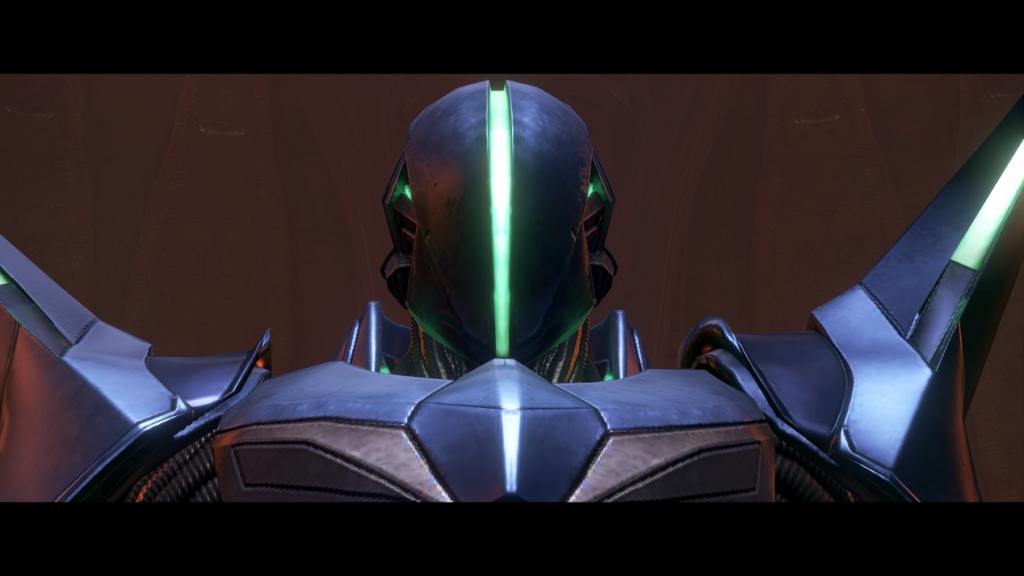
Adding to the Metroid Prime 4: Beyond discourse.
Metroid Prime 4: Beyond is the culmination of 18 years of waiting (8, if you’re counting from announcement). That does something to expectations. I won’t deny that. My expectations were mostly grounded in reality: it’d be a brand new Metroid game. It’d look great, play great, and so on. I might have even expected it to be infused with the feeling of something new.
Not Metroid’s Breath of the Wild or Odyssey, by any means, but a refinement of the treasured trilogy.
Fortunately, trailers tempered expectations. The open desert, the motorcycle, the nomenclature (Vi-O-La and Viewros), the psychic crystal in Samus’s head, the vapid NPC dialogue—all of these made me take pause.
Maybe this wouldn’t be the Metroid game I wanted, but by release, I was actually looking forward to it. The shock was out of the way. My expectations were reset. I was going to have fun with the game, goddammit! It was Metroid Prime 4: Beyond!
And you know what? I did. That’s the final word on it for me: I had fun playing Metroid Prime 4: Beyond. It looked great on my Switch 2 and on my TV. It played well with motion controls (after changing some settings). And it was fun.
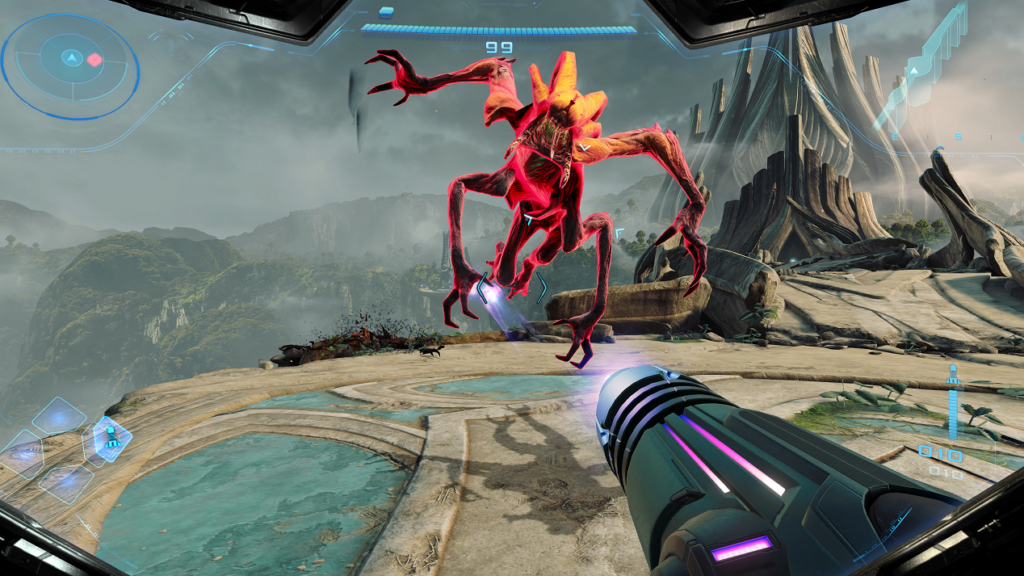
Normally, of course, I’d end with the final word. But getting from the start of the game to the end came with so much aggravation that I have to remind myself that I chose to return to it night after night. That I was having fun despite its problems. That Metroid Prime 4: Beyond was, you know what? Fine.
This disclaimer is also to tell you, dear (perhaps imaginary) reader, that I liked it. Because once you get through everything I have to say, you’ll very much doubt it.
Sometimes, so do I.
Spoilers ahead.
Character Counts
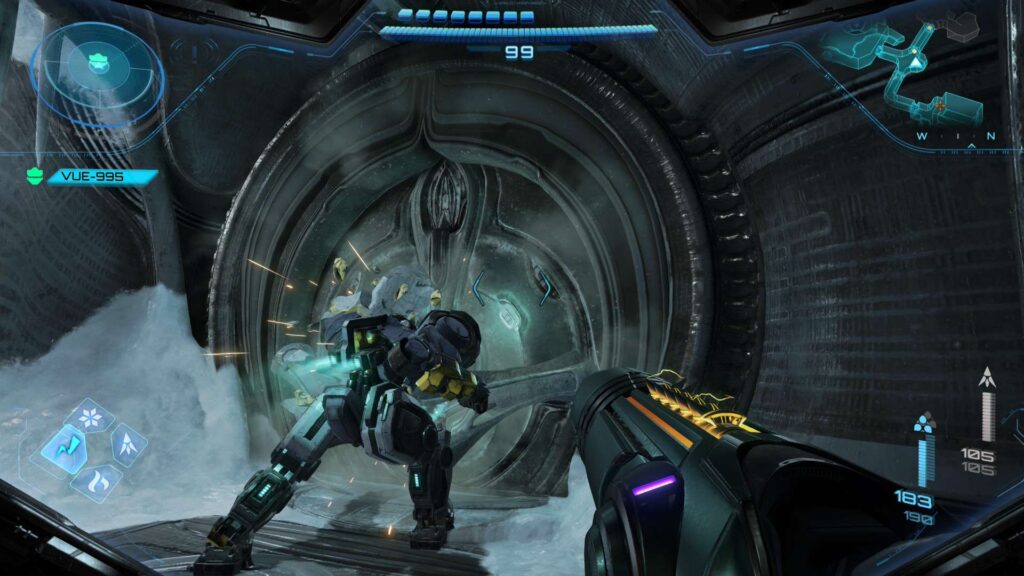
Perhaps the most divisive decision in Metroid Prime 4: Beyond is the inclusion of chatty NPC side characters. After all, this is a game series that has historically valued isolation and mood over constant dialogue.
And you know what? There IS a way Metroid games can include NPCs, a story it can tell that requires a supporting cast.
It just wasn’t this one.
The most damning thing about Metroid Prime 4’s cast is that they are completely nonessential. The plot genuinely would not change if they weren’t present on Viewros.
Neither would the information imparted to the player be affected. And that isn’t hyperbolic: most of the dialogue from different characters tells you what you JUST witnessed.
Exhibit A:
Samus turns on the power in a giant laboratory utilized for, among other things, alien ascension. The lights turn on, the generator purrs, and the vibe of the entire dungeon changes.
Tokabi (barely paraphrased): “Looks like the power’s turned on.”
Yeah, no shit, Tokabi.
Due to being antithetical to a series at large, the characters of Metroid Prime 4: Beyond needed to make themselves count. They needed to prove the point of their inclusion. They needed, dare I say it, to be more than avenues of repetitive information and well-trodden archetypes. It’s the nervous-energy engineer! It’s the gruff sergeant! It’s the sniper who doesn’t say much!
And even less to say of value.
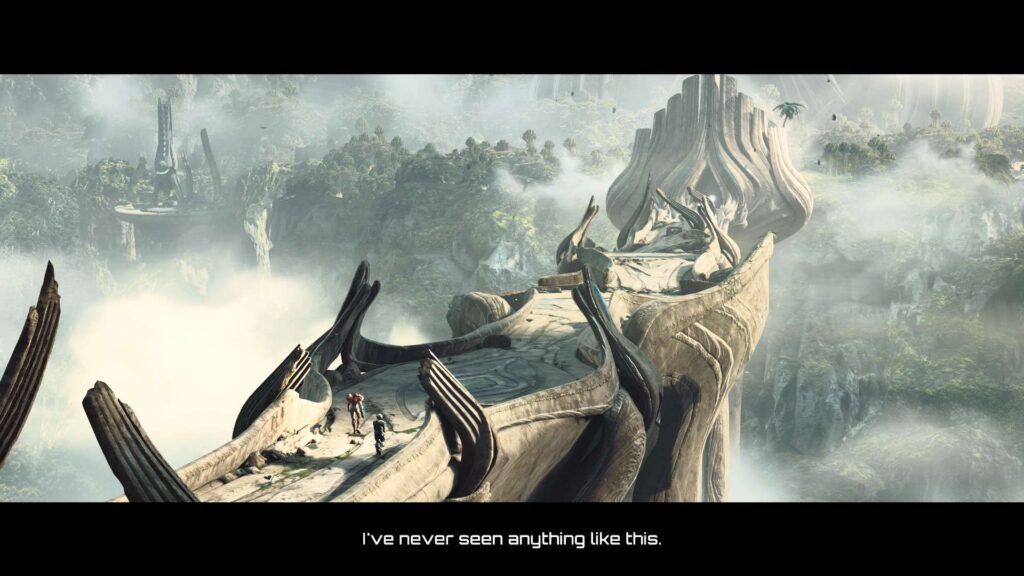
The engineer himself, Mackenzie, was the best of the bunch and the worst of the bunch. Best insofar as he could actually be helpful. When I was driving mindlessly across the dessert, delaying making a decision on which previous dungeon to return to because an incorrect guess would require me to backtrack all the way across this desolate expanse, it was Mackenzie who called in and set me on the right path.
Of course, it was Mackenzie who required me to head back to base camp every single time I got a new beam, unlike every other Metroid game where getting a new beam is the single-step process of picking it up.
I’d say I digress, but this is all tied to my main point. A part of me could say the side characters added to the heart of the game, in the rare instances when they had more to say than their usual observations of the obvious. I wasn’t about to lose any sleep watching them sacrifice themselves in the mine, one by one. Mostly, I was rolling my eyes. Samus didn’t frankly require them in the first place, and I had plenty of ammo to keep blasting grievers until their numbers ran out.
Alas, along for the ride they came. To my disappointment, none of their heroic sacrifices resulted in their deaths.
Characters are supposed to contribute meaningfully to plot. These didn’t because they weren’t a part of the plot. They were adjacent. Thus: why include them at all?
Somehow, it gets worse. More than their failure to matter, more than their lack of character or purpose, what I found most frustrating about them in the end was their inability to dodge Sylux’s electric attacks.
That’s right: on top of being aggravatingly vapid, they also turned the final boss fight into little more than an escort mission.
The Vi-O-l Guard
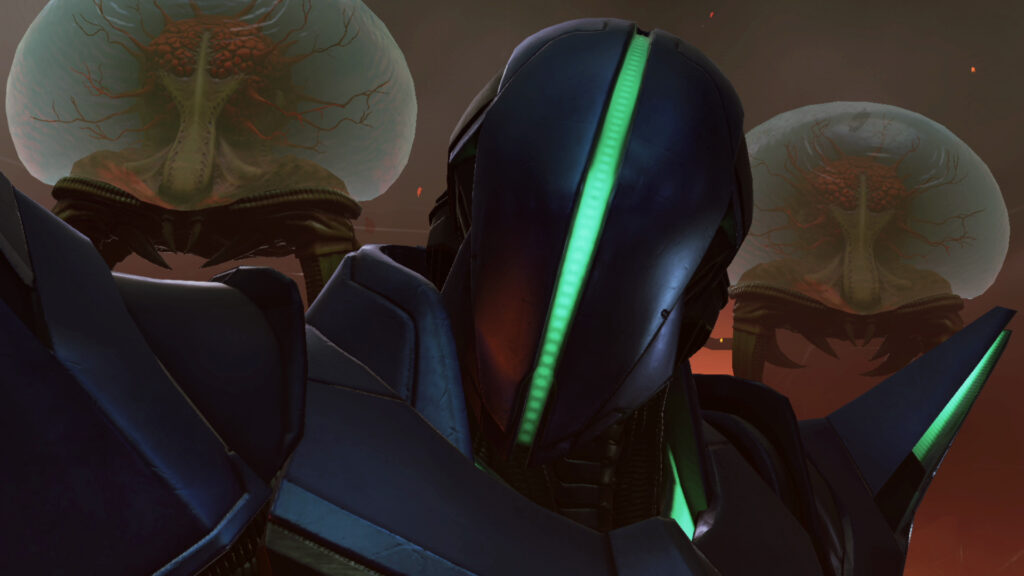
Let’s talk about the plot. There are effectively three elements to the story:
- Sylux
- The Chosen One
- Getting Home
All three of them are almost (if not) completely divorced of each other. The cast of side characters have nothing to do with the alien lore and Chosen One through-line, outside of someone reminding me at the end that I need to finish growing the memory fruit, and they have nothing to do with Sylux and his backstory other than the fact that they are there for the game’s final confrontation.
In too many words:
Samus shows up to help the Galactic Federation Force (GFF) at the UTO Research Center, which is under attack by Sylux. The base is studying some sort of alien artefact. Samus reaches the lab at more or less the same time as Sylux. They face off, and an errant blast hits the artefact.
Suddenly, a number of characters are teleported through space (and possibly dimensions) to end up on Viewros, the poorly named planet of a brand new alien race.
We will not see Sylux himself again until the final showdown at the game’s close.
A message is left by the Lamorn, the aforementioned, vaguely axolotl alien race who called Viewros home, for a prophesized Chosen One. Tragically, they’re dead. However, they’ve left the Chosen One an aptly-if-unimaginatively-named Psychic Crystal. They ask that the Chosen One secure their legacy via a memory fruit, which requires green crystal energy to obtain.
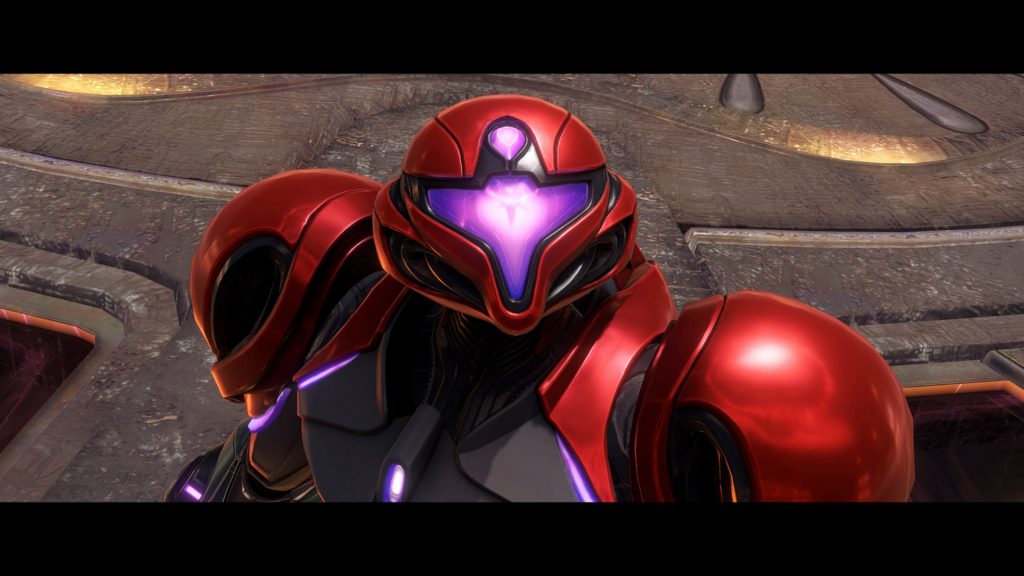
To leave Viewros and bring the prophecy to fruition, the Chosen One must gather five Teleporter Keys and bring them to the central tower, thus proving themselves.
Doing so brings Samus into contact with the various GFF soldiers and provides insight into the Lamorn, their history, and their tragic end. Basically, science and hubris combined to wipe them out. The details of their demise were the most interesting parts of the story, even if they were almost exclusively delivered via scans and exposition.
Twelve hours later, Samus has all the keys, the memory fruit, and the tag-alongs. We head to the tower in the center of the desert, turn on the teleporter, and—
Oh no, it’s Sylux!
I’m forgetting something very important: there was a flashback (or two?) showing some explosions. A battlefield. A GFF soldier. Samus offers him a hand, and he refuses it petulantly.
Turns out that soldier was Sylux.
Why is he mad at Samus? Beats me. Was that battle her fault? Was she not in time to save someone important to him? Was she on the other side? (Unlikely, since she seems more GFF special agent than bounty hunter at this point.)
I never found out.
I’ll be the first to admit I didn’t scan everything. I finished at around 80%. I scanned everything I saw (forgot a boss or two), but wasn’t fussed about tracking down missing pieces (mostly because I forgot a boss or two). Perhaps there were more details key to understanding what this guy’s deal is.
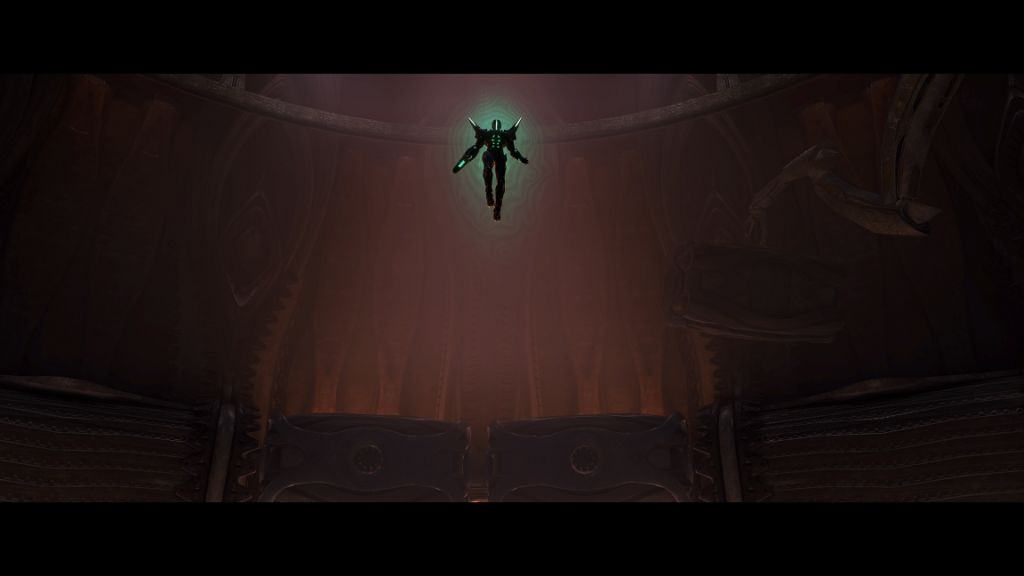
I should also mention that some of the planet’s robots did transform into Sylux, meaning we sort of faced off against him throughout the game. But it wasn’t Sylux. It was robots in disguise. Therefore, fake outs. Copouts.
Anyway, oh no, it’s Sylux! He goes all Doc Oc for the final fight, murders my back-up several times, and then fights me one on one (thank god) in space. I win. But apparently I don’t finish the job, because he shows up one last time to stop us from teleporting away. Thus, the entire cast of pointless soldiers tell me to go on without them as they hold down Sylux, Thanos-style.
So I do.
So, to recap, Sylux has nothing to do with the Lamorn. He has nothing to do with the soldiers. The soldiers have nothing to do with anything. Samus gets off Viewros, plants the memory fruit, and presumably expects to one day see Sylux again.
For all the pre-launch hyping up of Sylux, the game had very little to do with actual Sylux. In other words, he got Dreadwolfed. Solased. Veilguarded. Built up and let down.
As always, there’s a story that COULD have been told that tied all these disparate pieces together. The GFF soldiers could have been old squad mates of Sylux. Viewros could have been Sylux’s home world. Sylux’s past could have been more than a short flashback. Or, Metroid Prime 4 could have dropped all the riff raff and been a tighter game if it focused exclusively on the Lamorn.
By the Numbers
Videogames aren’t just the tales they tell, of course. And Metroid Prime 4: Beyond? Feels good. Looks great. In that regard, it’s definitely a Metroid Prime. The new psychic abilities are generally interesting: laying a bomb as the morph ball and throwing it as Samus is pretty cool. Firing a bullet and controlling it via psychic powers is mostly used to good effect.
Other than those, it’s business as usual. Spider ball, super missiles, different elemental beams. I can’t even say these old dogs were given new tricks, because they’re used in the same ways as they always have been. You need the right beam to open this door; you need the right upgrade to climb this rail. Fire, Ice, and Electric beams aren’t particularly inspired.
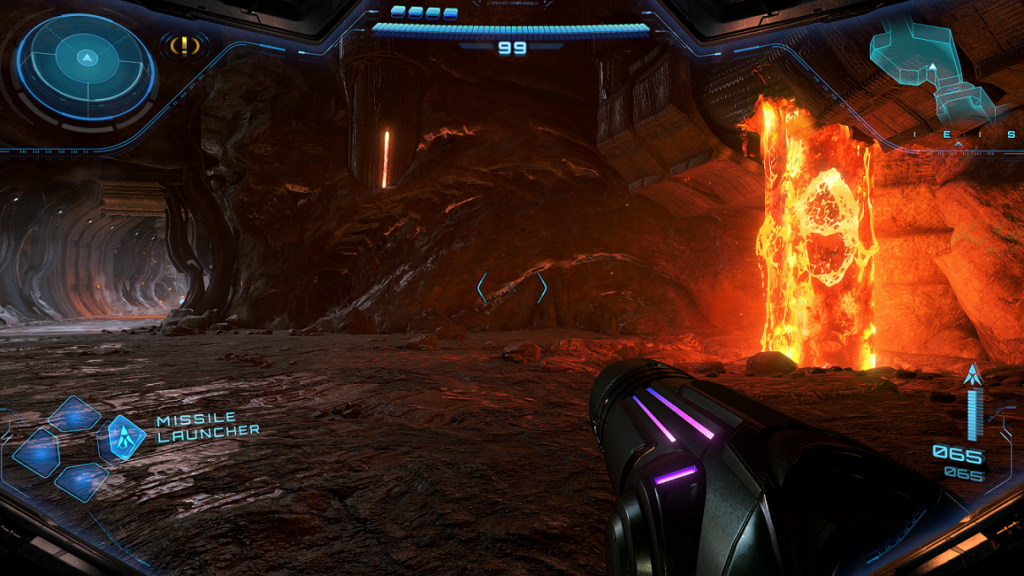
The zones weren’t particularly inspired, either. A forest, an ice mountain, a volcano. This is not the first (and probably won’t be the last) Metroid with magma being pumped through pipes.
There’s also an open desert, which really just made the trek between areas longer. The motorbike feels a bit goofy for Samus, and not just because it’s called the Vi-O-La. Frustratingly, getting that memory fruit by the end of the game required running over a ton of green crystals, the kind of thing that makes the driving a little more interesting than taking the direct path from A to B, but ultimately becomes a grind at the end of the game. The open desert, like the characters, doesn’t really prove its point. There are a handful of missile upgrades, six shrines with short puzzles that improve your elemental shots, and four mech pieces you need to gather before you can bust down the barrier protecting the central tower. Oh, and some boost stock for your bike.
That sounds like more than it is, to be honest. The bike did control well, at least, and I did enjoy driving around from crystal to crystal (until it became a required grind) on my way to my next destination. Just not enough to want to ever do it again. Of course, the desert was exclusively dunes, with no real variety beyond that. I thought they were used to good effect, though, both as jumps and in hiding the few shrines.
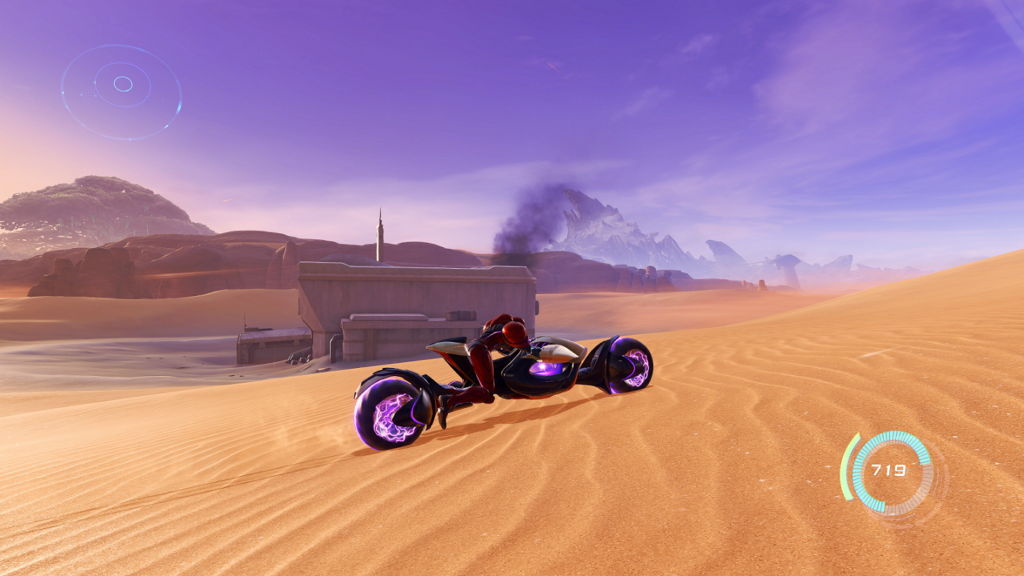
As for the combat? The robot enemies had decent variety, but the same can’t be said of the aliens. For being on a new planet, most of them sure were familiar.
The bosses got to be pretty repetitive, too. Most of all of them had the same three attacks: smash the ground, shoot, and bounce off the walls. My approach to these moves never changed. Jump over the waves when the boss smashed the ground. Dodge to the side at the last second when they shot. And just generally stay out of the way when they bounced across the room.
Lastly, I would be remiss not to mention the game’s coolest idea. In the mine section, shooting a missile attracts the attention of a wave of enemies. My tools didn’t change in the slightest, but my approach to using them did. THAT is the kind of smart design that can elevate a product without necessarily evolving it. It reminded me of Titanfall 2’s time-hopping mechanic, wherein players changed dimensions to take cover. That is, a cool idea that changes our approach to a section. I would have loved to see more of this in Metroid Prime 4: Beyond, clever twists rather than more of the same.
Final Thoughts on Metroid Prime 4: Beyond
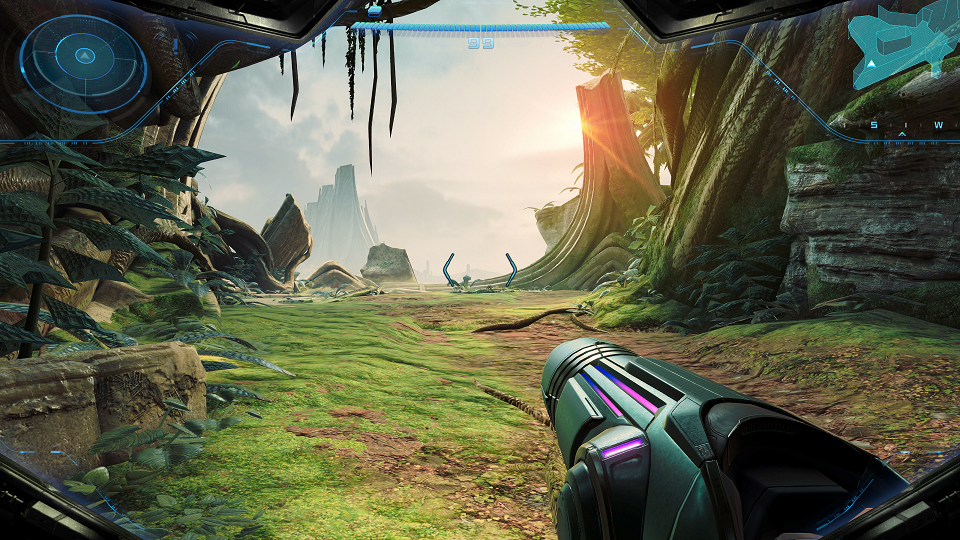
Metroid Prime 4: Beyond shows its budget. It looks phenomenal, runs at 120 FPS, and feels fantastic (with some adjustments to the settings). The only problem is, it doesn’t make a case for any of its marketed material: the side characters are pointless, Sylux barely features, and the open desert is barebones padding. There’s little in here we haven’t done in Metroid before, thanks to a reliance on old upgrades. Some of the psychic powers are cool, and the mine section features some nifty ideas, but such things are used sparingly.
Metroid Dread showed how the series’ storytelling could still be used to great effect, so why did Nintendo insist on chasing trends with Metroid Prime 4: Beyond? Metroid is unique for its isolation and mood, and should play to its strengths. It can still do this while adding side characters. It can still do this with open exploration (which does not mean an empty, sprawling space, Nintendo!). Hell, it can still do this with Sylux.
Just not like it was done in Metroid Prime 4: Beyond.